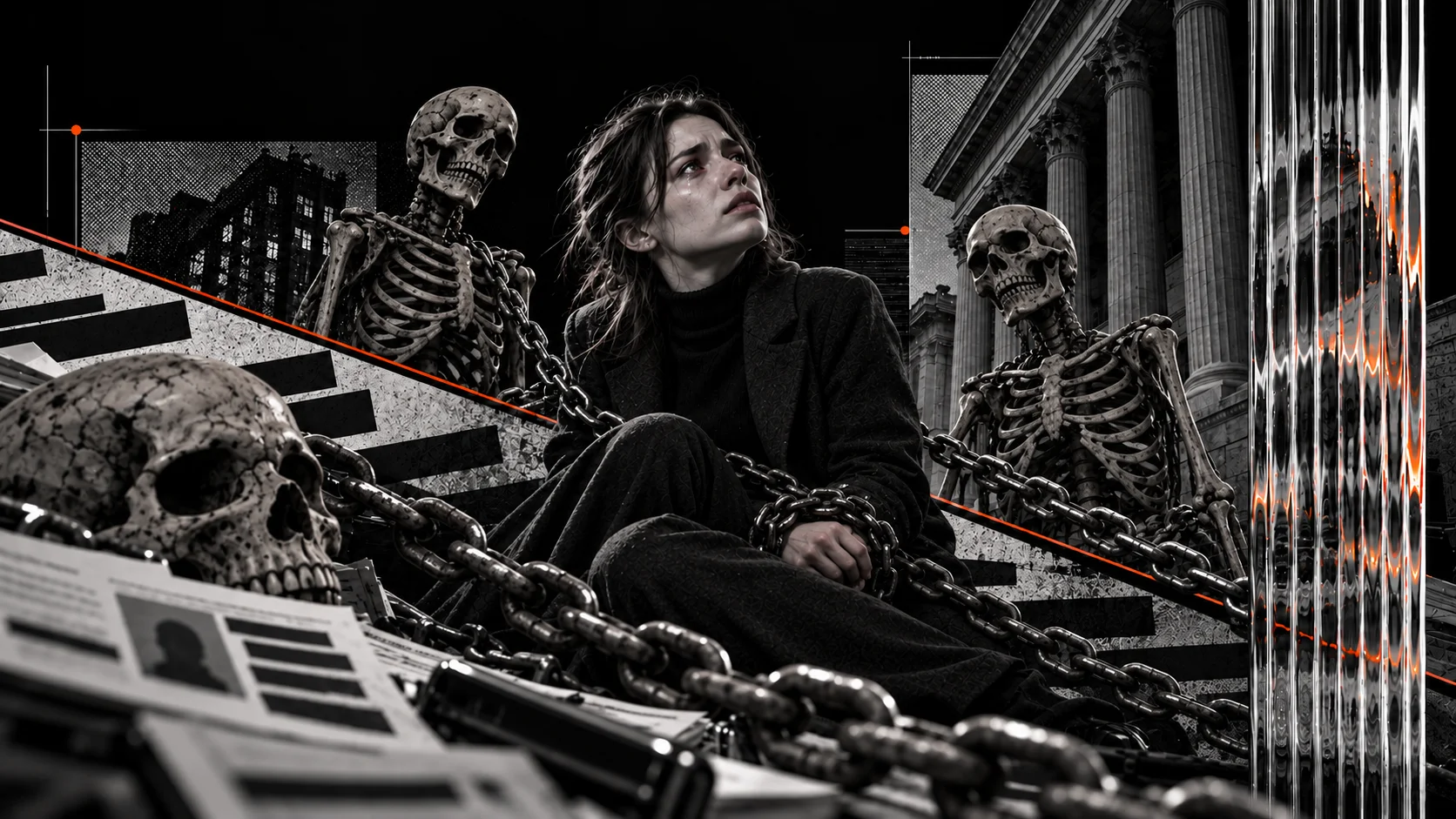
I keep reading the same comment under every post about the Epstein files. Doesn’t matter the platform. Always the same gut reaction.
“What kind of world is this?”
“Why was I even born?”
“It’s over. Everything is rotten.”
I get it. When you read that children were used as currency between people who smile on camera, your stomach turns. And it should. If you feel nothing, that’s the actual problem.
But what you’re feeling isn’t the truth about the world. It’s the truth about what you’re looking at.
There’s a principle that runs through everything that exists, and it’s so simple we forget it.
Everything has two faces.
Where there’s light, there’s shadow. Where there’s life, there’s death. Where there’s energy, there’s void. Where there’s good, there’s evil.
Not sometimes. Always.
This isn’t some feel-good “look on the bright side” speech. It’s a structural observation. Reality operates in polarities. Every thing that exists carries its opposite within it.
It’s true in physics.
It’s true in biology.
It’s true in human societies.
If human beings are capable of the most abject horror, it’s because the same species is capable of unimaginable sacrifice, absurd love, beauty that knocks the air out of your lungs. Both come from the same place. You can’t have one without the other.
That doesn’t mean you should accept evil. It means you should stop being surprised by its existence.
The real trap is that we live inside an information system structurally biased toward horror. And it’s nobody’s fault in particular. It’s pure evolution.
Your brain is wired for survival. For hundreds of thousands of years, the humans who ignored danger died. The ones obsessed with threats survived. Your attention is literally programmed to lock onto what scares you, disgusts you, revolts you.
Platforms know this. Media knows this. They’re just surfing a mechanism that existed long before them. You click on horror. Not because you’re morbid. Because you’re human.
So you end up living in a world where the worst 0.01% of events make up 90% of what you see. And your brain, which never evolved to process a planetary information feed in real time, treats all of it like it’s your immediate local reality.
It’s not.
This morning, somewhere, a stranger helped an old man cross the street. A doctor saved a kid in the ER at 3am and nobody filmed it. A father read his daughter a story before bed. A woman quit a job that was destroying her to build something that actually looks like her.
None of that got a single click. No algorithm pushed those moments in front of your eyes.
Ordinary good has zero market value in the attention economy.
But it exists. Massively. Everywhere. All the time. You don’t see it because nobody shows it to you.
Life is worth living, and that’s not a slogan. It’s an active choice you make every day against a system that bombards you with reasons to give up.
Disconnect. Regularly.
Not to run from reality, but to recalibrate it. Three hours scrolling through horrors isn’t staying informed. It’s self-destruction. Information is only useful if it lets you act. If it paralyzes you, it’s poison.
Look in the right direction. The people you love. The work you do with your hands. The small concrete things that make no noise but hold your world together.
The world has always been like this. Always. The horror didn’t increase. Your observation window exploded.
There are reasons why these dynamics of power and exploitation exist. Structural, historical, systemic. It’s not just “bad people.” It’s deeper and more interesting than that. I’ll get into that in a future essay.
If the world feels unlivable, you’re looking through the wrong window. Change the window. Not to deny what exists. To see everything that exists.
Both faces of the coin. Always.