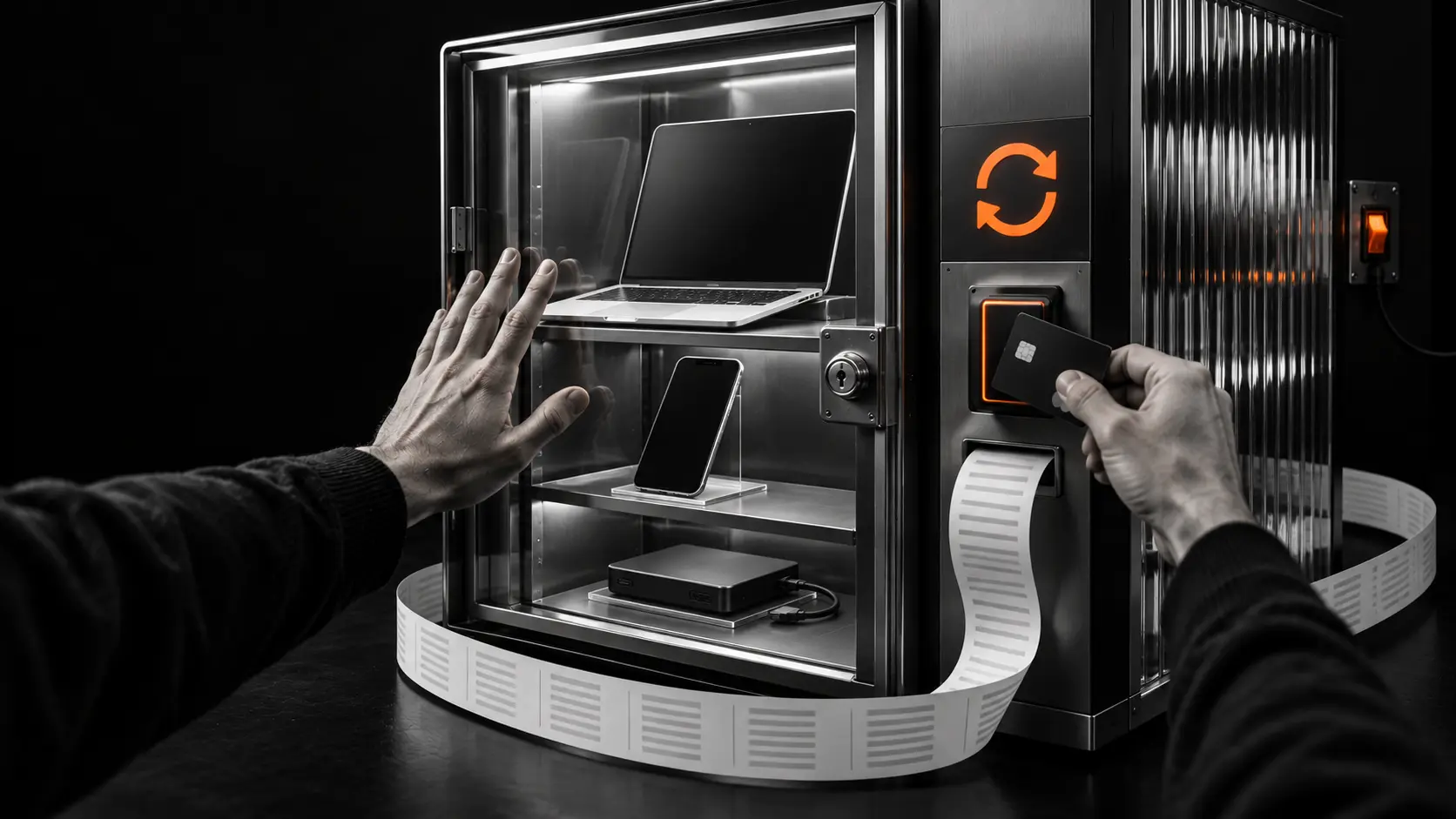
The AI boom is eating the world’s hardware. Corporations are hoarding RAM, SSDs, GPUs, every component they can get their hands on. Data centers are expanding faster than supply chains can feed them, and consumers are left with empty shelves or prices that have doubled in two years.
So HP, Dell, and Lenovo are all testing subscription models for laptops and desktops. Not software. The physical machine on your desk. A monthly fee to use hardware that someone else owns.
Their Machine, Their Rules
The second you rent a device, you accept someone else’s terms of service.
You can’t install Linux on a rented laptop. You can’t disable their AI monitoring tools. You can’t block ads. They can force you to run Adobe instead of a competitor, mandate which browser you use, which cloud stores your files, which apps count as “approved.” If they detect a modification, an unapproved app, a blocked service, they can warn you or just brick the device remotely. It’s their property and you agreed to the terms.
This goes well beyond computers. Tesla is already moving to subscription software for vehicle features. The pattern is the same everywhere: what you use belongs to someone else, and they set the rules for how you use it.
The Kill Switch You’re Not Thinking About
Getting banned from social media already feels catastrophic. Losing your Twitter account, your YouTube channel, an audience you built over years.
Getting banned from your computer is a different kind of problem. If you rent your devices, they can remotely shut down your laptop, your phone, your car. One policy violation, one flagged opinion, one algorithmic misfire, and everything you depend on goes dark. Not your accounts this time. Your actual tools. Your ability to work and move.
Payment processors already cut off legal businesses for political reasons. App stores pull software they don’t like. Banks freeze accounts over social media posts. The infrastructure for total digital exile exists today. Subscription hardware just closes the last gap.
There’s also a quieter version of this that works just as well. Instead of cutting you off, they degrade your experience. Good subscribers get the full catalog, fast hardware, priority support. “Problematic” subscribers get throttled, restricted, quietly downgraded until they either comply or give up. Nobody kicks you out. They just make every interaction slightly worse. Think of it as a corporate social credit system you opted into when you signed a terms-of-service agreement you didn’t read.
Your Data Is Already Being Held Hostage
The AI hardware shortage isn’t just eating computers and GPUs. Storage devices are getting scarce and expensive too because data centers are swallowing supply. A 4TB drive that cost €80 two years ago is now double that, when you can find one at all.
Local storage becomes a luxury and cloud becomes the only option, not because it’s better, but because the physical alternative is disappearing from the market.
Google Drive, iCloud, OneDrive can all change pricing, scan your files, restrict what you store, or lock you out whenever they want. Google has already deleted user accounts for “policy violations” with zero appeal. If cloud is the only place your work, your photos, and your entire digital life exist, a single automated flag can erase all of it overnight.
This plugs into a feedback loop that runs itself. You rent the computer, so you can’t customize storage. The storage market is gutted by AI demand, so you can’t buy your own drives. Cloud becomes your only option, which is yet another subscription on top of everything else. Three layers of dependency reinforcing each other, and none of it requires coordination between companies. Market forces handle it.
The Drift Is Already Happening
Nobody needs to plan this. Every company independently reaches the same conclusion: recurring revenue beats one-time sales.
Netflix was the only streaming subscription you needed ten years ago. Now you pay for ten platforms to watch what used to cost one cable bill. Nobody coordinated that.
Video games took it further. Xbox Game Pass, PlayStation Plus, hundreds of titles for a flat monthly fee. Then a game you love gets pulled overnight because a licensing deal expired. A studio gets into a controversy and their catalog quietly shrinks. “Access to 400 games” really means access to 400 games they currently approve of, rotated at their discretion, playable on their terms only. You didn’t buy a library, you’re borrowing a shelf that someone else rearranges when they feel like it. And the more people subscribe instead of buying, the less reason publishers have to sell anything at all.
The same logic is coming for hardware. Five subscriptions for five devices, each with its own restrictions, its own price hikes, its own rules about what you’re allowed to do with the thing sitting on your desk.
Thanks for reading! Subscribe for free to receive new posts and support my work.
When Ownership Becomes Suspicious
Once subscription devices hit critical mass, owned devices start looking like anomalies. An unregistered laptop on the network, a phone without a management profile, and someone calls it a “security risk” that needs to be “addressed.” The language of safety gets used, as it always does, to justify the removal of choice.
The people who went along with renting because it was cheaper will be the ones pressuring holdouts to fall in line.
Right-to-repair dies quietly in this world too, because you don’t have the right to repair something that isn’t yours. They send a replacement, you send back the old one, they control the entire lifecycle. Independent repair shops disappear. Planned obsolescence becomes irrelevant because they rotate your hardware on their own schedule anyway.
The Price Always Goes Up
Once you’re locked in, the price increases. The business model depends on it.
Subscription revenue runs on switching costs. Your work files live in their cloud, your software runs on their machine, your muscle memory is built around their ecosystem. Walking away means rebuilding everything from scratch, and they know most people won’t do it.
It doesn’t need to reach 100% market penetration to become suffocating. It just needs enough adoption that the alternatives dry up. When every major manufacturer rents instead of sells, “just buy your own” becomes about as realistic as telling someone to grow their own food when every grocery store within 50 kilometers shut down.
The Generation That Never Owned Anything
Kids growing up right now have never bought music. Many have never bought a game. They stream everything, and ownership as a concept is becoming alien to them. You can’t miss what you never had.
When these kids become the majority of consumers, nobody will fight for the right to buy because nobody will remember what it felt like to own something. The window to push back is shrinking now, one subscription at a time, one generation at a time.
What You Should Do About It
Buy your devices. Pay upfront. It costs more today and nothing tomorrow.
Buy local storage. A NAS, external drives, whatever you can find. Prices are climbing and they’re not coming back down.
Support companies that still sell products instead of access. Run open-source software where you can. Build a setup that works without someone else’s permission.
The moment everything you use belongs to someone else, you belong to them too.